In the highly competitive landscape of modern manufacturing, agility is not merely a desirable trait—it is an absolute necessity.
Businesses are constantly having to react to fluctuating market demands, new product lines, and evolving operational requirements.
The traditional factory layout, characterised by fixed, permanent walls, is becoming a costly and time-consuming hindrance to this essential flexibility.
This is where the concept of flexible factory partitioning steps in, offering a dynamic and pragmatic solution that is revolutionising how industrial space is utilised across the United Kingdom and beyond.
Fixed structures were built for a different era, one defined by mass production and stability.
Today’s industrial facility, however, must be a fluid environment, capable of swift reconfiguration to accommodate lean manufacturing principles, safety legislation, and sudden changes in production volume or process.
Embracing flexible partitioning allows businesses to stop viewing their factory floor as a rigid, unchangeable blueprint and start treating it as a strategic, adaptable asset.
The Imperative for Agility in Modern Manufacturing
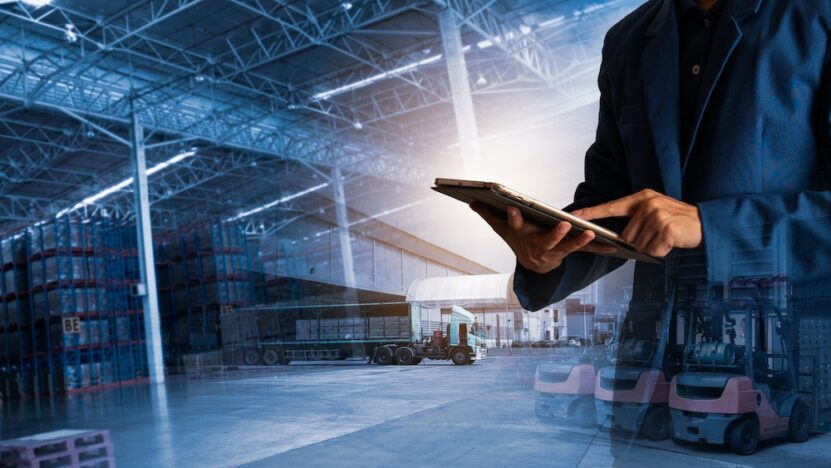
The shift towards smaller batch sizes, customised production, and just-in-time delivery places enormous pressure on physical infrastructure.
A fixed wall, once installed, represents a significant commitment in both capital and time.
Moving it requires disruptive construction work, planning permission in some cases, and costly downtime—all of which erode profitability.
The modern industrial environment necessitates a different approach.
Lean methodologies, for instance, demand constant optimisation of workflow and space to eliminate waste.
If a production line needs to be shortened, lengthened, or relocated to improve efficiency, the factory layout must be able to follow suit without delay
Flexible partitioning allows facility managers to implement these improvements instantly.
It supports the core tenets of efficiency and continuous improvement, ensuring that the physical workspace is a facilitator, not a bottleneck, to business progress.
Furthermore, regulatory compliance, particularly regarding dust and fume control, necessitates the ability to quickly and effectively segregate zones, a task that fixed walls handle poorly compared to adaptable systems.
Unpacking the Benefits: Why Go Flexible?
The business case for adopting adaptable factory layouts is multifaceted, extending far beyond simple physical rearrangement.
The benefits touch on crucial areas such as cost management, operational efficiency, and workplace safety.
Cost-Effectiveness and Speedy Deployment
Perhaps the most immediate advantage is the financial saving.
Installing permanent blockwork or drywall is expensive, requires substantial labour, and typically involves prolonged disruption.
Flexible partitioning systems—whether they be modular hard panels or industrial curtain walls—are installed swiftly, often in a fraction of the time.
They are designed for simple dismantling and reassembly, meaning the initial investment can be amortised over multiple factory configurations and product cycles.
They also avoid the lengthy planning and building control processes often associated with permanent structural changes, leading to a much faster return on investment.
Enhanced Workplace Safety and Segregation

Safety is paramount, and flexible systems are adept at creating controlled environments. They are highly effective at:
- Noise Reduction: Creating acoustic barriers to protect employees in adjacent workspaces from loud machinery.
- Contaminant Control: Effectively sealing off zones to prevent the migration of dust, fumes, or spray paint to clean areas or finished product zones.
- Temperature Zoning: In large, high-bay warehouses or factories, heating or cooling an entire space is incredibly inefficient. Flexible partitions, particularly insulated curtain walls, can create smaller, temperature-controlled zones, leading to substantial energy savings and a reduced carbon footprint.
- Process Segregation: Clearly defining areas for specific, potentially hazardous, operations like welding, grinding, or chemical handling, protecting general staff from risk.
Optimised Energy Efficiency
The ability to create smaller, manageable thermal zones directly impacts overheads.
By partitioning off only the necessary working areas for heating or cooling, businesses can dramatically reduce their energy consumption.
This is increasingly vital in a climate of rising energy costs and national commitments to sustainability.
The materials used in many flexible systems, such as thermal-backed PVC or insulated modular panels, are specifically engineered to provide an effective thermal break, ensuring conditioned air remains exactly where it is needed.
Scalability and Future-Proofing
A business that invests in fixed partitioning today is betting that its operational needs will not change for years.
A business that opts for flexible factory partitioning is prepared for growth, shrinkage, or a complete pivot in production.
If a new piece of large machinery is acquired, or if a smaller area is needed for an R&D project, the partitions can be moved, added to, or removed entirely without waste or heavy construction.
This inherently future-proofs the facility, ensuring that the physical structure never dictates, or limits, the strategic direction of the business.
Types and Materials: A Tailored Solution
Flexible partitioning is not a one-size-fits-all product; it encompasses a range of solutions tailored for specific industrial requirements.
Industrial Curtain Wall Systems
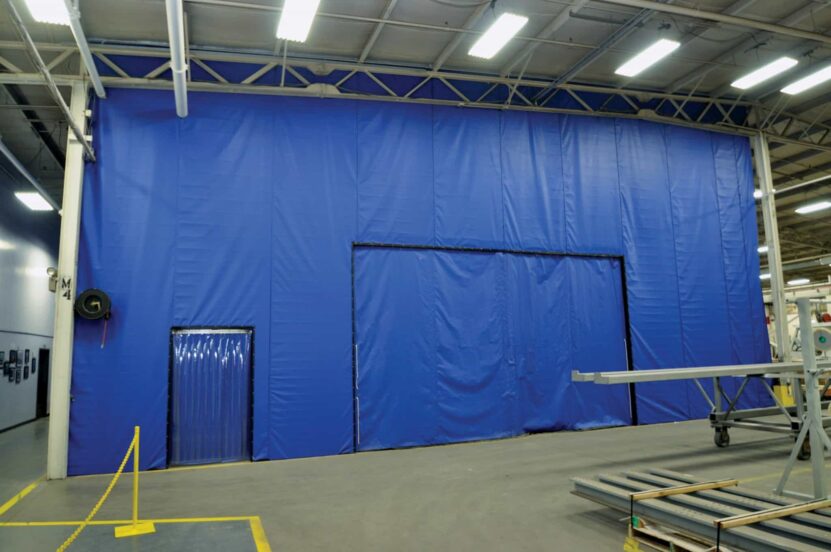
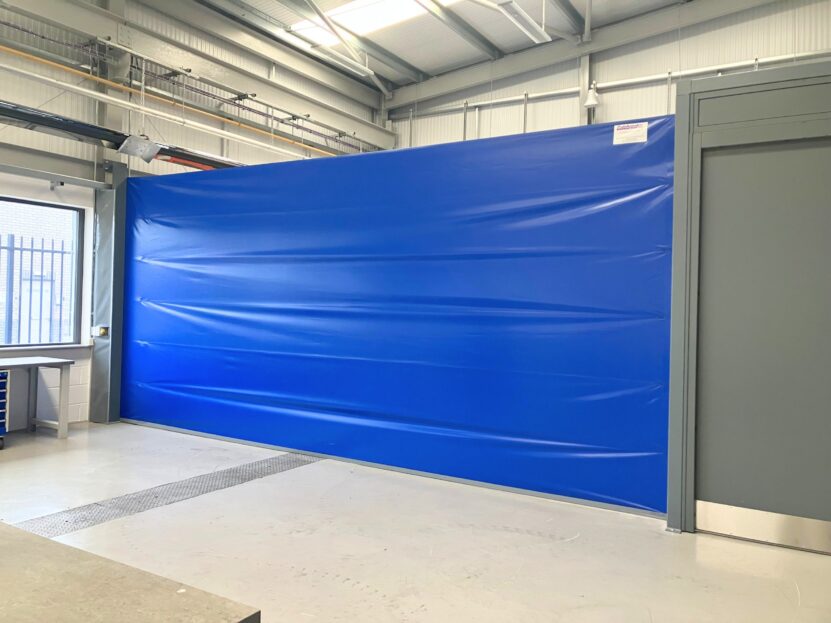
These are the most rapid and cost-effective form of flexible zoning. They typically utilise heavy-duty, reinforced vinyl or PVC material, often fire-rated and resistant to chemicals.
They are suspended from overhead tracking systems, allowing them to be easily drawn back like a large curtain for full access.
Varieties include:
- Weld Screens: Opaque, fire-retardant curtains to protect bystanders from welding flash.
- Insulated Curtains: Featuring a central thermal layer, ideal for creating cold storage lobbies or separating ambient zones from chilled areas.
- Strip Curtains: Used for frequent traffic areas, allowing personnel and forklifts to pass through whilst maintaining environmental separation.
Modular and Demountable Hard Partitioning
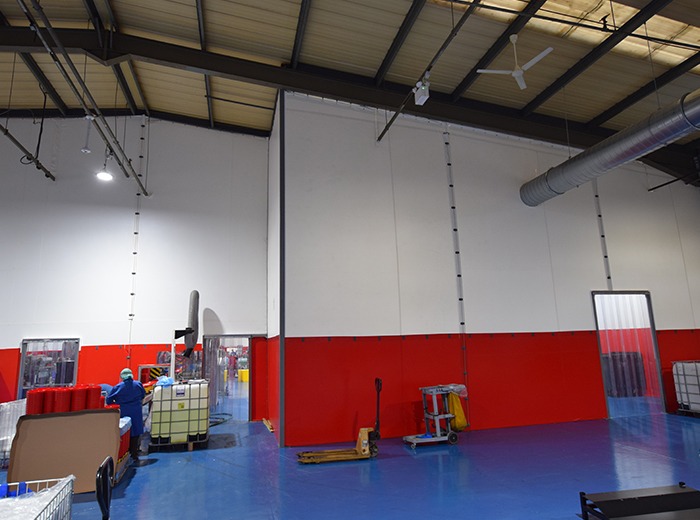
For applications requiring greater security, higher sound attenuation, or the integration of solid doors and windows, modular hard panels are the superior choice.
These systems comprise pre-finished panels, often constructed from steel, aluminium, or composite materials, that lock together.
They offer a finish akin to a permanent wall but can be installed and demounted with simple hand tools.
They are the ideal choice for creating in-plant offices, secure storage cages, or high-specification cleanroom environments where air pressure and cleanliness must be strictly controlled.
Practical Applications Across Industry
The utility of these adaptable solutions spans virtually every sector of industry:
- Automotive: Segregating messy bodywork or painting booths from precision assembly lines.
- Food and Beverage: Creating temporary or seasonal high-care / low-risk zones to manage contamination risks during peak production.
- Pharmaceuticals: Establishing validated, pressurised cleanrooms that can be quickly reconfigured for different drug manufacturing processes.
- Warehousing and Logistics: Dividing large warehouse spaces into specific pick-and-pack areas, returns processing zones, or secure high-value goods cages, adapting instantly to changes in stock levels or operational demands.
- Aerospace: Setting up dust-free inspection or repair bays for sensitive components.
The ability to dynamically change the factory’s layout is no longer a luxury but a core competence.
It permits businesses to respond to fluctuating market forces and optimise their processes with minimal friction.
This level of responsiveness provides a significant competitive edge in an increasingly volatile global economy.
The Future of Factory Layouts
The implementation of flexible factory partitioning represents a progressive shift away from static, monolithic industrial design towards a model based on dynamic efficiency.
It is a vital tool for any forward-thinking business in the manufacturing or logistics sectors looking to control costs, enhance safety, and ensure their physical infrastructure remains perfectly aligned with their strategic business goals.
By adopting these adaptable systems, companies gain the critical ability to tailor their environment to the task at hand, securing efficiency and compliance simultaneously.
To discover how your operation can benefit from embracing this versatile and essential technology, you can explore detailed information on flexible factory partitioning.