

Most people walk into a house and look at the kitchen. They open cabinets, test the water pressure, picture where the couch goes. Then they make an offer.
That part is easy. The part that costs people real money happens on paper, weeks before closing, and a surprising number of buyers rush straight past it.
Buying property is two purchases at once. You are buying a building, and you are buying a piece of land with a legal history attached to it. Most buyers examine the first and assume the second is fine. Usually it is. When it is not, the bill arrives after you already own the place.
The Check Most Buyers Skip Is the One About the Land
Ask ten recent buyers what they did before closing and nine will mention the inspection. Almost none will mention pulling the parcel records, the permit history, or a copy of the site plan. That gap is where the expensive surprises live.
Why the inspection alone will not cover you
A home inspector tells you about condition. Roof age, panel capacity, moisture in the crawl space, whether the furnace is limping. That is valuable, and it is not the whole picture.
An inspector generally will not tell you:
- Where your property line actually runs.
- Whether the deck was permitted.
- Whether a utility company has a right to dig through the back yard.
- What the zoning allows you to build later.
- Whether the lot has flooded before.
Worse, plenty of buyers skip even the part they do know about. Survey data from the National Association of Realtors has shown roughly a fifth of buyers waiving the inspection contingency in recent monthly readings, mostly to make an offer look stronger.
NerdWallet notes that the inspection exists to protect the buyer from major issues they cannot see, and that it is completely separate from the appraisal, which only reassures the lender that the price makes sense.
Dropping it to win a bidding war is a gamble with a very lopsided payoff.
What the records are supposed to tell you
Sellers present their homes at their absolute best, and they are right to. Staging, fresh paint, and smart prep work before listing are standard practice. None of that is deception. It just means the visible layer is the layer you are least likely to learn anything new from.
The paper layer is different. Deeds, surveys, permit files, and hazard maps are dull, specific, and hard to dress up. That is exactly why they are worth your time.
Boundaries, Easements, and What You Actually Own
View this post on Instagram
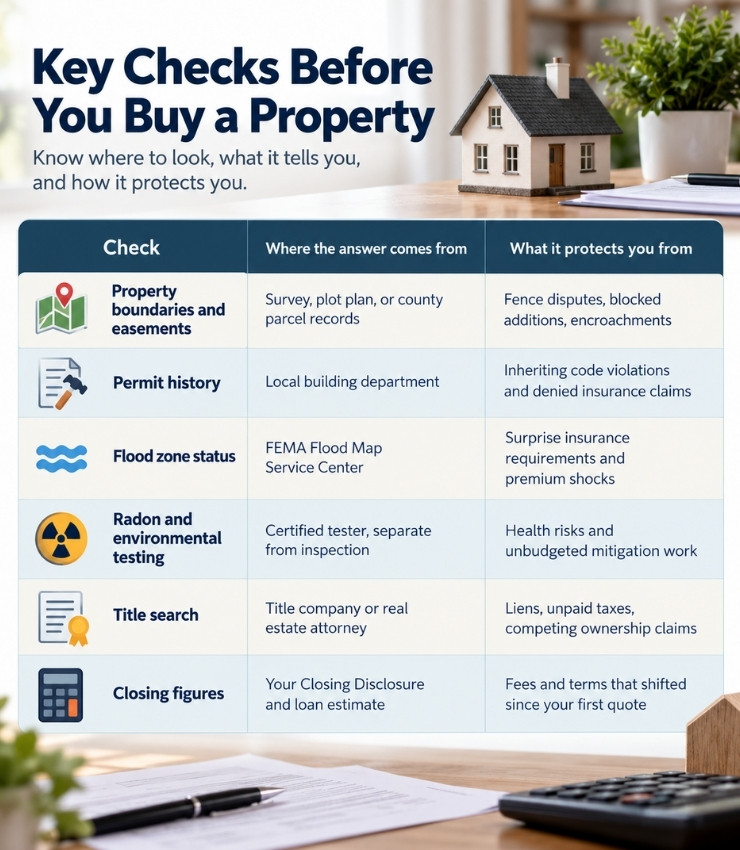
Here is a scenario that plays out constantly. A buyer closes, moves in, and puts up a fence along what everyone assumed was the line. Two years later a survey for the neighbor’s refinance shows the fence sitting three feet onto their lot. Now it is a legal dispute, and the new owner pays to move it.
Lot lines are not obvious from the driveway. Neither are easements, setback rules, or recorded rights of way. A drainage easement can quietly rule out the garage addition you were already sketching in your head.
Before you commit, get a document that shows the parcel itself: structures, setbacks, easements, and where the boundaries sit.
If the seller cannot produce a recent survey or plot plan, you can order one, and services like Get A Site Plan will put together a scaled drawing of the property from county and satellite records.
It is a modest cost against the price of the transaction, and it answers questions the walkthrough never touches.
Pull the Public Records Before You Remove Contingencies

Most of this information is public and free. The obstacle is not access, it is timing. Contingency periods run short, and buyers spend them arranging financing instead of digging.
Permits and work that was never signed off

Finished basements, converted garages, added bathrooms, and sunrooms are the usual suspects. Call the local building department and ask for the permit history on the address. Compare it to what you saw.
If the addition was never permitted, the liability transfers with the title. You may be told to bring it up to code, or to tear it out. Insurers have also been known to deny claims on unpermitted work. This matters just as much on homes that look freshly updated, since exterior upgrades like new siding can hide what was done underneath them.
Flood, radon, and environmental history
FEMA runs the official public source for flood hazard information, and its Map Service Center lets you look up the flood map covering a specific property. That status drives whether your lender requires flood insurance and what it costs. Do it before you have a number in your budget, not after.
Radon is the other one buyers forget. The EPA is blunt about it in its guidance for real estate transactions: have the home tested when buying or selling, and treat it as a separate request from the general inspection, because it usually is. A test kit costs very little. Mitigation, if needed, is a negotiating point while you still have leverage.
Read the Numbers as Carefully as the Rooms

The financial side has its own skipped step. The CFPB points out that in the run-up to closing you are expected to arrange the inspection and shop for title and homeowner’s insurance yourself, and that signing is the moment the loan becomes fully yours.
Your Closing Disclosure arrives three business days before closing for a reason, and the Consumer Financial Protection Bureau is clear that the window exists so you can compare it against the loan estimate you were given earlier. Put them side by side, line by line. Fees move. Sometimes they move a lot.
Budget past the purchase price too. Deferred maintenance, a roof with four years left, and the yard and outdoor work you will want in year one all belong in the same spreadsheet. Anyone weighing a property as an investment rather than a home should be even more disciplined about this, since returns depend on the numbers you did not overlook.
FAQ
The Bottom Line
The check most people skip is not glamorous. It is a phone call to the building department, a flood map lookup, and a document showing where your land begins and ends.
None of it takes more than a day. All of it happens while you still have room to negotiate or leave. Buying property goes wrong far more often on paper than on the walkthrough, and paper is the part you can actually verify before you sign.